 Litter born 26 October 2009
VITAL STATISTICS: Litter of eleven babies born shortly after 11:00 p.m. on the night of Monday, 26 October 2009, Littleton, Colorado. Parents are mother D'Arcy (born 2 July 2009) and father Spencer (born 24 May 2008). The litter is made up of four males and seven females. CONTACT INFORMATION: The "breeder" is Liz in Littleton. Telephone 303-997-9240. Please call and keep in touch. Any questions you might have about hamster care, we will gladly answer. Call anytime, 24/7. The family has been breeding hamsters for approximately forty hamster generations (almost 20 years) and has produced winners at national hamster shows, including the "winner of winners" (best in show) in Wilmington, Deleware, 1998. These babies were lovingly cared for in their youth to ensure that they grow up to be strong and healthy. They are very much loved and will be missed. IMAGE GALLERY: Below are baby pictures and photos of the parents. Scroll through photos of the mother and father, the babies as newborns, at two weeks of age when they leave the nest and, finally, as month-old adults. GETTING ACQUAINTED: When a new hamster comes home for the first time, he or she is bound to be a little shy and not easy to handle. That can be overcome in a few days with patience. Several times a day, place a hand on the bedding in the cage while the hamster is awake. Leave it for two or three minutes. Even if you are ignored, keep doing it. Curiosity eventually will bring the hamster to check you out. And gradually, often in less than a week, you can start carefully picking the hamster up. Use both hands to lift the hamster from the floor of the cage, then place one hand gently on top while balancing the hamster carefully on the other. Before long, you hamster will know you and become "tame" and cuddly. HAMSTER NECESSITIES: Make sure your hamster has a cage that is escape-proof and easy to clean. Bedding should consist of either pulped recycled paper or soft wood shavings (no splinters and no cedar - ever!). Some other options such as shredded corn cob are available and perfectly good, but not as common. Check the water bottle every day to make sure it drips properly. Keep it filled. The hamster's cage should be kept in a place without direct sunshine or draft. The ideal room temperature for a hamster is about the same as for people - around 65-70 degrees. WHAT TO FEED: Hamsters need a regular diet of seed mix and basic food, i.e., the rodent-food blocks that are sold at pet shops. In addition, they should get fresh fruits or vegetables as a regular part of their diet - at least a couple of nights a week. Best fruits are grapes, banana, strawberries, tomato and apple (no appleseeds!). They also appreciate fresh foods like kale greens, broccoli, carrots and peas. Frozen vegetables are fine when thawed and served uncooked. Sweet peas, string beans, soy beans, corn, carrots, etc. are inexpensive and healthy. Hamsters also appreciate cooked pasta and cooked rice (make with little or no salt). Cabbage is a nutritious food for hamsters but should be boiled for at least three minutes before serving. Tofu is a treat that is very good for hamsters and almost universally liked. You might also try mixing raisins in their seeds. Do not feed items include anything salty or spicy, chocolate and onion. They love the sweet treats sold at your pet store. Just make sure not to overdo. There are many web pages where you can find more comprehensive information about hamster care and food ideas. Click here for a list. |
|
Image Gallery |
|
|
|
|
|
|
|
|
|
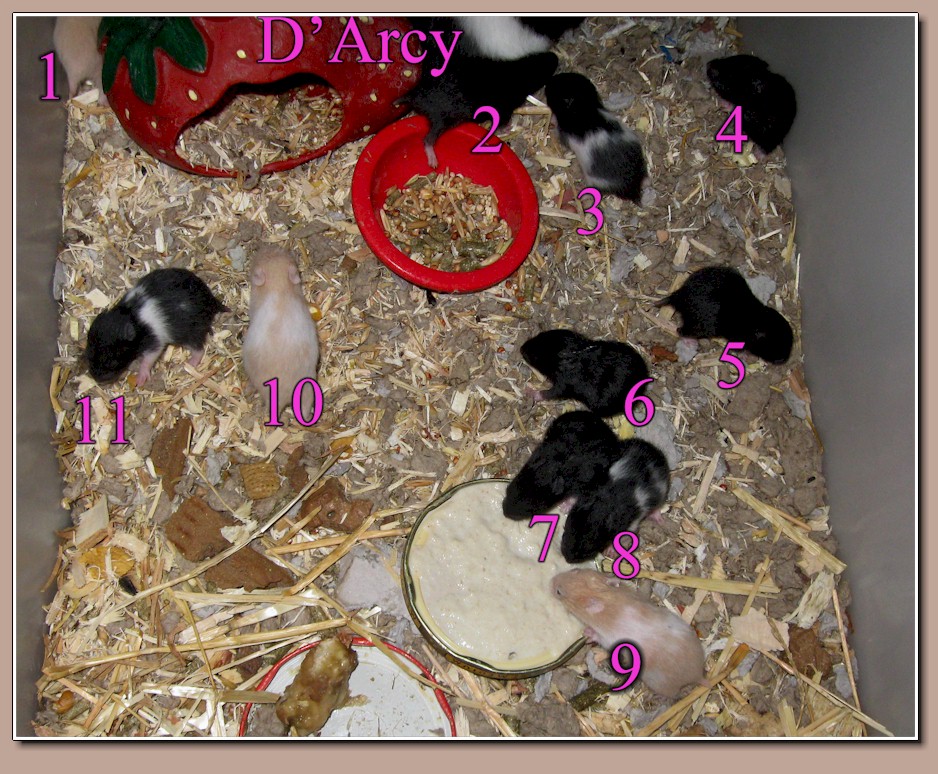 Here is our "census photo" - also taken at age two weeks - showing D'Arcy and the entire litter . The genders are identified by number. (1), a tan-and white hamster partically visible in top left corner, is a female; (2) is an all-black female; (3) black and white "panda hamster" male; (4) all-black female; (5) all-black female; (6) all-black female; (7) all-black male; (8) "panda" female; (9) tan and white female; (10) tan and white female; and (11) "panda" female. |
|
|
|
|
|
|
|
|


.jpg)
.jpg)


